Young Man’s Leg Saved from Amputation After Complex Multi-Stage Reconstruction at Narayana Super speciality Hospital, Guwahati
When Trauma Surgery is the Only Hope Left
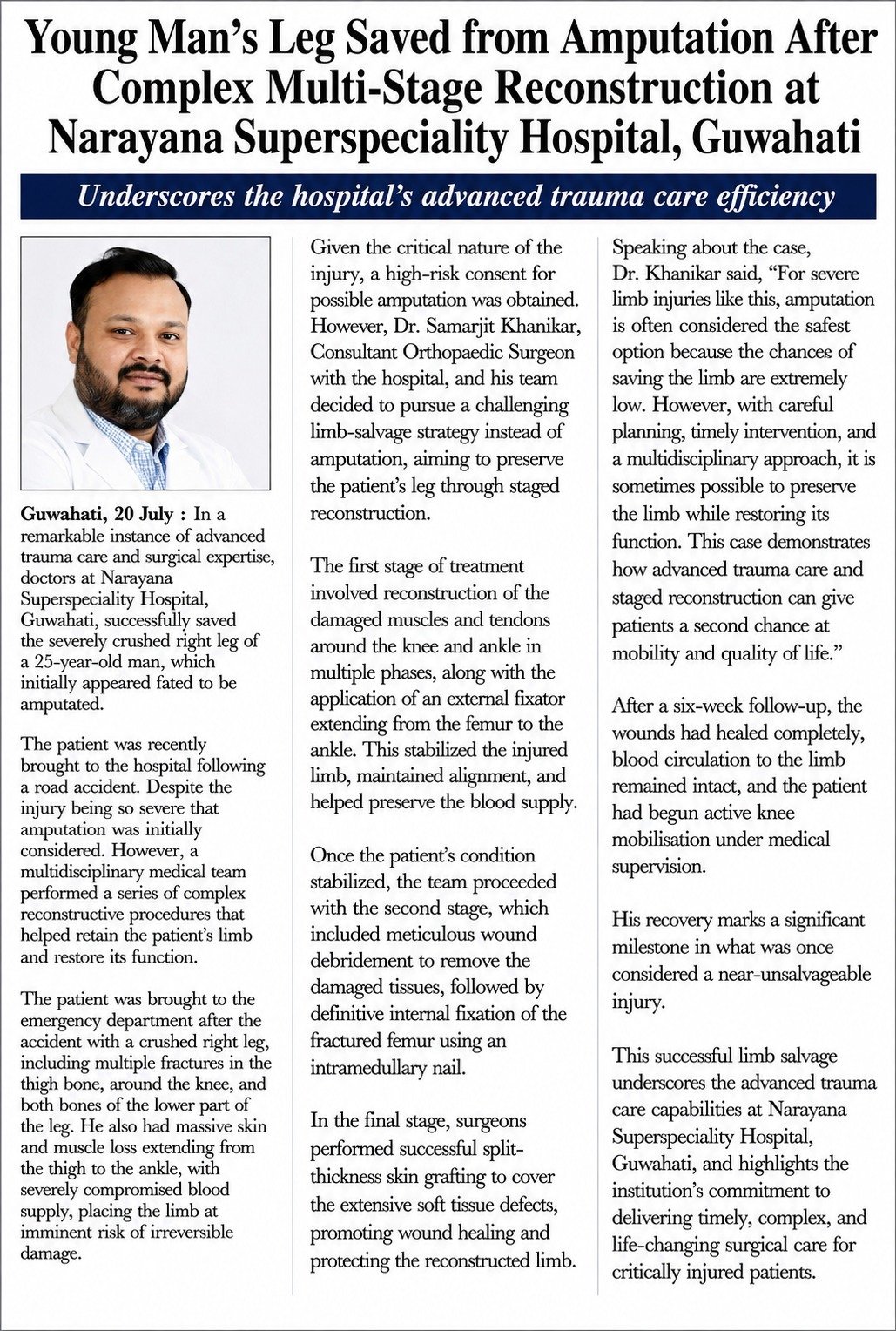
Life changes fast. One minute you’re just commuting down the road, totally minding your own business, and the next? Everything turns completely upside down. That’s exactly what happened to a 25-year-old guy right here in Guwahati not too long ago. After a brutal traffic accident, the medical team initially thought they’d have to amputate his right leg just to save his life, because the accident crushed it so badly. It’s the kind of news no one ever wants to hear, especially when you are just starting out in life.
But the doctors at Narayana Super speciality Hospital weren’t quite ready to throw in the towel. They leaned heavily on their expertise in trauma surgery and decided to try something incredibly difficult—a multi-stage limb reconstruction and spoiler alert: it actually worked. This story serves as a massive testament to how modern medicine and a stubborn refusal to give up can completely change a person’s future.
The Heartbreaking Reality Before the Surgery
Imagine being 25 and waking up to hear you might lose your leg. The fear is just completely paralyzing. When the team first rushed the patient into the emergency room, they saw the situation looking incredibly grim. They dealt with shattered bones all around the knee and lower leg, a massive loss of skin, and severe muscle damage stretching from his thigh to his ankle.
Indeed, the blood supply greatly hampered, and the tissue died minute by minute.
The doctors even had the family sign a high-risk consent form for a possible amputation. It’s standard protocol when they see things looking this bleak but signing that piece of paper still feels like a total gut punched. Samarjit Khanikar, the lead orthopaedic surgeon, knew the odds were totally stacked against them. Still, he and his team opted for a limb-salvage strategy instead of taking the easier, faster route. Not only did they face a complex trauma surgery route, but they also knew exactly what was on the line for this young man’s independence.
Step One of the Trauma Surgery Masterplan
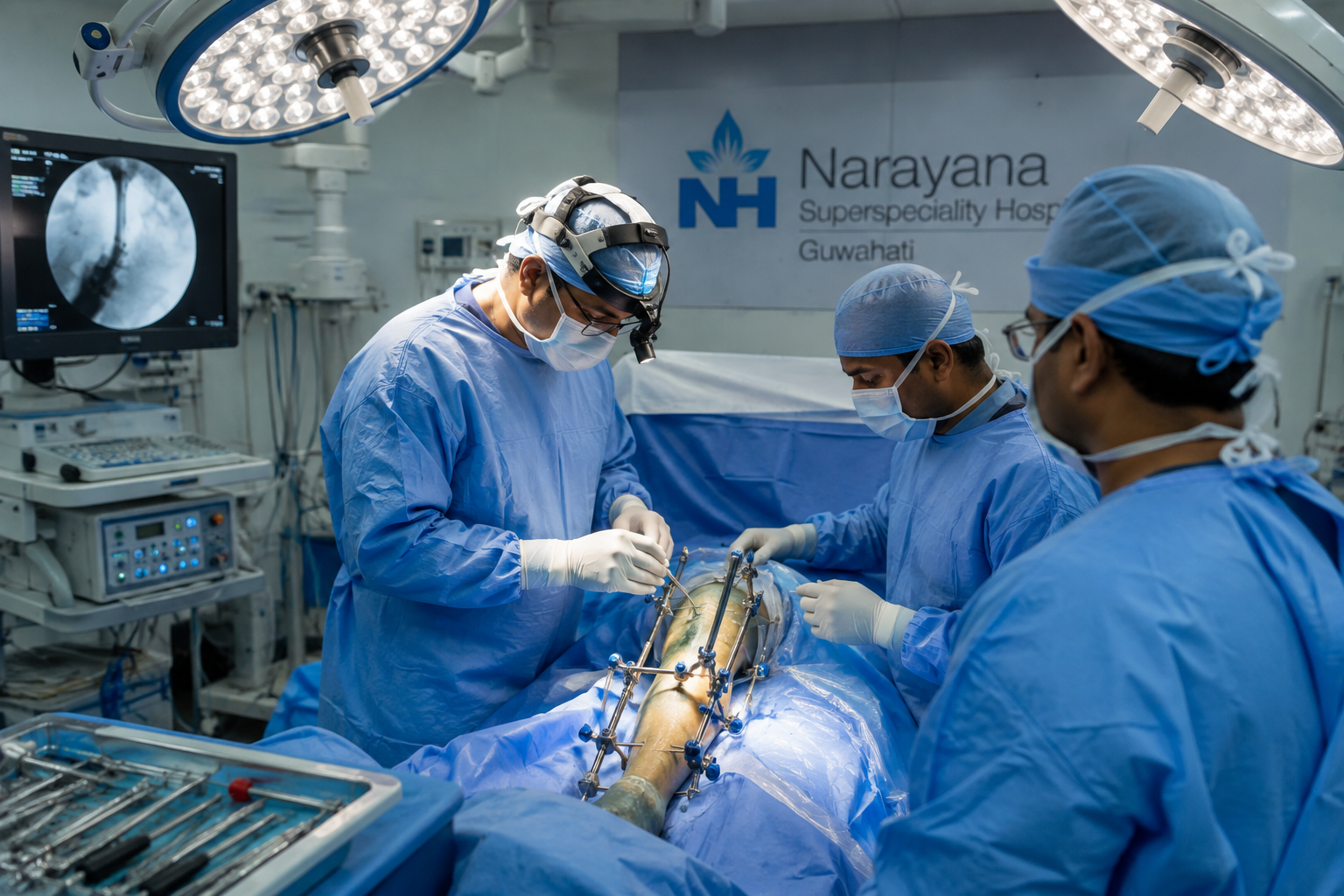
You can’t just fix an injury of this magnitude all at once. It requires a lot of patience and planning. The first major hurdle in this trauma surgery was simply keeping the crushed leg alive. The doctors stabilized the shattered bones and, more importantly, restored that critical blood flow before the tissues passed the point of no return.
So, they went in and carefully pieced the damaged muscles and tendons back together in multiple phases. Next, they introduced a device known as an external fixator. If you haven’t seen one, it basically looks like a rigid metal cage holding the leg in place from the outside. It looks pretty intimidating, sure, but it does a fantastic job of holding the broken femur and lower leg bones completely still. This brilliant move gave the crushed limb the much-needed breathing room it needed to survive the initial shock of the accident.
Digging Deeper with Phase Two of Trauma Surgery
When the patient finally managed to leave the immediate danger zone and his condition evened out, the big work really started. The second phase of this trauma surgery involved a procedure called meticulous wound debridement.
Basically, the surgeons went in and painstakingly cleaned out all the damaged, unsalvageable tissue. They had to remove all the bad before the good could come back safely. After they finally had a clean slate to work with, it was time for them to fix the major bones permanently.
They swapped out that external metal cage for something called an intramedullary nail. That’s a highly specialized titanium rod that they placed right inside the bone marrow canal of the fractured femur. It acts like an internal pillar, giving the leg incredible core strength from the inside out without needing clunky hardware bolted to the outside of the body anymore.
The Final Polish in This Surgery Journey
Fixing the bones and muscles was a massive victory for the medical team, but they still had one glaring issue left on the table. The crash had ripped away huge chunks of the patient’s skin. They couldn’t just leave internal tissues exposed to the open air; that was a massive infection risk waiting to happen. To finish up the physical reconstruction part of the trauma surgery, the team performed a split-thickness skin graft.
They carefully shaved a very thin layer of healthy skin from another safe part of the patient’s body
and grafted it right over the massive soft tissue defects on his leg. It sounds a bit like science fiction, but the human body is genuinely amazing.
That new skin acts like a living, breathing bandage. It sealed the extensive wounds, protected the hard work the surgeons did underneath, and drastically sped up the overall healing process.
Life After a Miracle Trauma Surgery
Getting through the operation room is really only half the battle. The rest involves waiting, hoping, and doing the incredibly grueling work of physical therapy. Fast forward to a six-week follow-up appointment, and the clinical team reported results that were nothing short of incredible. The massive wounds had totally healed up.
The blood circulation to the foot was going strong, and the best part? The patient had already started to actively move his knee again under medical supervision.
Dr. Khanikar mentioned that with severe limb injuries like this one, the medical team usually considers amputation the safest bet because the limb is often just too far gone to save. But this specific case proves that if you have the right medical team, solid planning, and immediate intervention, miracles can actually happen. This trauma surgery didn’t just save a piece of anatomy—it gave a 25-year-old his entire life back.
Why Expert Trauma Surgery Matters for the Community
At the end of the day, clinical outcomes like this one don’t just happen by accident. Hospitals fully equipped to handle the absolute worst-case scenarios at a moment’s notice are necessary.
Mr. Sagnik Saha, the Facility Director at Narayana Super speciality Hospital in Guwahati, summed it up perfectly. He pointed out that this success highlights the hospital’s deep dedication to advanced, patient-first care. A dedicated, well-oiled machine of a medical team is needed to pull off a multi-stage reconstruction this complex.
Successfully saving a limb that was literally moments away from amputation shows
exactly why having access to top-tier trauma surgery is so incredibly important for the local community. It’s all about fighting for the absolute best possible outcome for the patient, even when the easiest answer stands right in front of you.
Frequently Asked Questions (FAQs) About Trauma Surgery ❓
Q1: What exactly is trauma surgery?
They work incredibly fast to stop internal bleeding, fix shattered bones, and keep critically injured patients stable when every single second counts.
Q2: Why do doctors often suggest amputation first in these severe cases?
Q3: What’s the deal with that external fixator used in trauma surgery?
Q4: How long does it actually take for a patient to recover from something like this?
Q5: Can you explain what a skin graft is in simple terms?